Decentralised Cooperation in an Uncertain Global Context
The Barcelona Provincial Council has promoted the 10th Conference of the EU–LAC Decentralised Cooperation Observatory to examine the challenges facing cooperation in an increasingly uncertain global environment. The event focused on debates, alliances and proposals from a rights-based and feminist perspective.
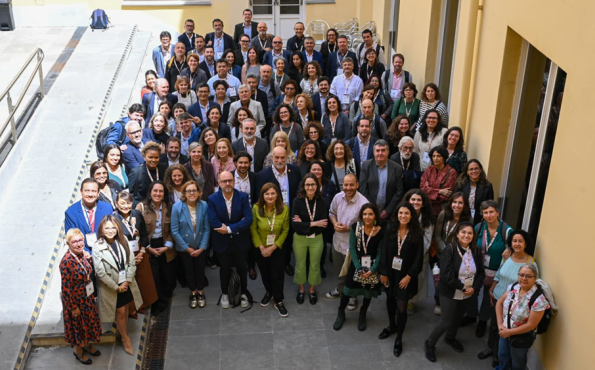
Barcelona hosted the conference on 7–8 May under the title “Decentralised cooperation in an uncertain and unequal world: new narratives or a return to the roots”. The event brought together around 120 experts, Local Governments oficials and councillors, networks and International organisations representatives and professionals working in decentralised cooperation.
The conference provided a platform to analyze both the challenges and opportunities for decentralised cooperation in a context shaped by uncertainty, inequality and shifts in the international order, while also fostering dialogue and collaboration between local and international actors.
Debate and Reflection on the Future of Cooperation
The first day combined keynote speeches, dialogues and panel discussions focusing on the socio-economic, geopolitical and cooperation landscape. Particular attention was given to the role of local governments in shaping new narratives and dynamics within global cooperation.
Two key reference documents prepared by Octavi de la Varga and Morena Herrera were presented. Discussions also addressed the need to rethink decentralised cooperation from a political perspective and its role in strengthening public policies.
Day Two: Collaborative Work and Proposals
The second day centered on practical and participatory work through group workshops facilitated by specialists.
Sessions explored the challenges and opportunities of decentralised cooperation and feminist local public policies, as well as the tools and mechanisms needed to reinforce them. This highlighted how decentralised cooperation can promote and strengthen cross-cutting public policies, particularly feminist approaches.
The conference concluded with a plenary session where participants shared the outcomes of the working groups and proposed future lines of action to reinforce decentralised cooperation, especially from a rights-based, feminist and locally driven perspective.
Key Conclusions
Several main conclusions emerged from the conference:
- A more complex and fragmented global context: Rising inequality, concentration of power and changing international relations are significantly shaping international cooperation.
- Setbacks in rights and cooperation systems: Participants warned of weakening multilateralism, reduced funding and a declining centrality of human rights in global agendas.
- Local governments remain key actors: Cities and territories play a fundamental role in addressing global challenges such as climate change and inequality, despite often lacking sufficient resources or political recognition.
- Risk of recentralisation: A global trend towards the recentralisation of power is limiting the capacity of local governments and weakening decentralised cooperation.
- Need for renewed narratives and alliances: Strengthening the political dimension of cooperation is essential, with a focus on global justice, feminism, human rights and network-based collaboration.
- A space for resistance and innovation: Despite current challenges, decentralised cooperation is consolidating as a key tool for building local responses, sharing knowledge and strengthening democracy at the local level.
Strategic Role of the Observatory
The conference highlighted that, in a global context marked by geopolitical tensions, funding cuts and challenges to multilateral frameworks, platforms such as the EU–LAC Decentralised Cooperation Observatory are becoming increasingly relevant.
Beyond reflection, the Observatory is consolidating its role as a strategic meeting space for local governments, institutions and civil society. It enables the exchange of perspectives, sharing of experiences and collective rethinking of the future of cooperation.
At a particularly complex moment, this capacity for coordination and shared thinking is essential to sustain decentralised cooperation with strong political ambition and deep local roots.
X Conference Website (Spanish)